
Surgical Procedures
At Safi Vision, we provide comprehensive medical and surgical eye care focused on restoring and protecting sight. These represent only a portion of the wide range of treatment options available at Safi Vision. From basic in-office procedures to complex anterior segment and corneal surgeries, we take a personalized approach to help each patient achieve clearer, more comfortable vision and lasting ocular health.

Cataract Surgery
A cataract is a cloudiness in the lens which is a structure just behind the colored part of the eye known as the iris. Cataract surgery is performed to remove the cloudy lens and replace it with a clear, artificial lens implant. There are different lens options available such as a standard lens or specialty lens, which can correct astigmatism and, in some cases, provide a range of vision to reduce or even eliminate the need for glasses. Your surgeon will help guide you with selecting the best lens for your eyes.

Pterygium Surgery
A pterygium is a growth of tissue on the surface of the eye, often caused by long-term sun and wind exposure. Pterygium surgery involves carefully removing this growth and replacing it with healthy tissue. In many cases, the surgeon uses either healthy tissue from your own eye or a sterile membrane to cover the area. These techniques help the eye heal smoothly and reduce the chance of the pterygium recurring.

Ocular Surface Surgery
Ocular surface surgery is performed to treat conditions that cause irregularities of the cornea’s surface, such as inherited corneal dystrophies or degenerative processes of the cornea. These procedures help smooth the corneal surface, improve clarity, and can improve symptoms such as blur. Techniques often involve superficial keratectomy or similar procedures to restore a more regular corneal surface.

Minimally Invasive
Glaucoma Surgery (MIGS)
MIGS is a group of newer surgical techniques designed to lower eye pressure in patients with glaucoma. Unlike traditional glaucoma surgery, MIGS procedures are gentler and less invasive, often allowing for faster recovery and fewer risks. They can be performed at the same time of cataract surgery or as a stand-alone procedure.

Anterior Segment
Reconstructive Surgery
Anterior Segment Reconstruction may be needed in cases where the eye has been affected by trauma or previous complications that require advanced surgical repair. These procedures can involve reconstruction of the iris, placement of an intraocular lens, or the use of specialized techniques to secure a lens inside the eye when standard placement is not possible. The goal of this surgery is to restore the structure and function of the eye.

Corneal Transplantation
Corneal transplant surgery may be recommended when the cornea is affected by inherited conditions such as Fuchs’ endothelial dystrophy or by scarring from trauma or infection. Depending on the location of the damaged cornea, the surgery may involve either a full-thickness or a partial-thickness corneal transplant. These techniques replace only the layers of the cornea that are diseased, preserving healthy tissue whenever possible to help restore vision. The specific surgical approach will be discussed with you and tailored to each patient’s specific condition to restore clarity and vision.
In-Office Laser Procedures
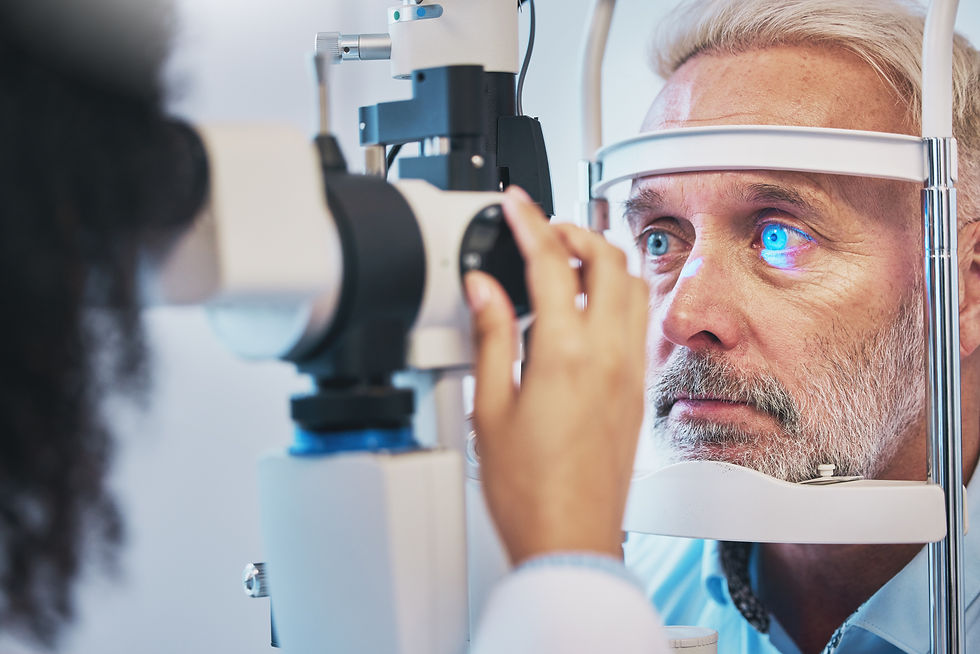
YAG Capsulotomy
After cataract surgery, some patients may develop a thin film on the back surface of the lens implant. This is called an “after-cataract” (not a true cataract). If this film becomes visually significant, it can cause symptoms similar to those experienced before cataract surgery, such as blurry or hazy vision. A YAG capsulotomy is a quick and painless procedure that uses a special laser to gently clear this film from the backside of the lens. The treatment can restore vision clarity and is performed safely in the clinic without the need for surgery.

Selective Laser Trabeculosplasty
In certain types of glaucoma with an open drainage angle, a safe and effective laser treatment called Selective Laser Trabeculoplasty (SLT) can be used to lower eye pressure. The laser works by gently targeting the eye’s natural drainage system to improve fluid outflow and reduce pressure. Some patients experience a significant reduction in eye pressure, while others may notice only a modest change. If the pressure-lowering effect wears off over time, SLT can often be repeated. SLT is an important option to help manage glaucoma and can reduce the dependency of long-term use of glaucoma eye drops.

Peripheral Iridotomy
In some patients, the drainage angle of the eye is very narrow, which increases the risk of a sudden rise in eye pressure. This can cause pain, blurry vision, halos around lights, nausea, and in severe cases, permanent vision loss. This condition is known as acute angle-closure glaucoma. To help reduce this risk, a laser can be used to create a small opening in the colored part of the eye. This opening improves fluid flow inside the eye and it can help lower the risk of dangerous pressure spikes. The procedure is quick, safe, and can be an important step in protecting your vision.